REGULATORY STATUS & ACCESS
Wolverine Legal Status, FDA 503A Category, and Compounding Access
FDA's page current April 22, 2026 shows that the nominations for both blend components were withdrawn and both are no longer in Category 2, but the agency has not told pharmacies what follows from those withdrawals. Here is exactly where the record stands, cited to FDA.
What the Wolverine legal status is, right now
The most recent event is a concrete one: the Wolverine blend's component peptides were on the agenda of FDA's Pharmacy Compounding Advisory Committee (PCAC) meeting of July 23-24, 2026, as candidates for the Section 503A bulks list [14]. FDA staff had proposed against adding them, and as of September 2026 FDA has published no record of the committee's votes.
The Wolverine legal status today is precise. The blend is not a single regulated entity; its legal standing is the standing of its two components, BPC-157 and TB-500. Neither is an FDA-approved drug, and the assembled blend has no approved therapeutic indication anywhere. FDA placed both components in 503A 'Category 2' with the September 29, 2023 update, identifying potential significant safety risks; on the agency's page current April 22, 2026, the nominations have been withdrawn and both components are no longer in that category [12][13]. The FDA page still publishes its safety rationale for each substance, but FDA has not explained what a 503A pharmacy may do after the nominations were withdrawn [11].
FDA 503A record: what changed and what FDA has not answered
The Federal Food, Drug, and Cosmetic Act governs drug compounding through two sections. Section 503A covers traditional, patient-specific compounding by state-licensed pharmacies and physicians, generally pursuant to a valid prescription for an individual patient. Section 503B covers FDA-registered 'outsourcing facilities' that may compound larger batches under cGMP-style oversight. A compounder may use a bulk drug substance only if it has an applicable USP/NF monograph, is a component of an FDA-approved drug, or appears on the relevant FDA bulk drug substances list [11].
Under FDA's interim policy, nominated substances were sorted into categories. Category 1 substances may be eligible for the bulks list and are covered by enforcement discretion while FDA evaluates them. Category 2 substances are those FDA identified as raising significant safety risks; they are not afforded that discretion, and FDA has stated it would consider taking action against a compounder for compounding with a Category 2 substance [11]. FDA placed both BPC-157 ('BPC-157 (free base)' and 'BPC-157 acetate') and 'Thymosin beta-4, fragment (LKKTETQ), also known as TB-500' in Category 2, citing concerns including potential immunogenicity for certain routes of administration and complexities with peptide-related impurities and active-ingredient characterization [12][13]. FDA's own list entry establishes the relationship between the names: TB-500 is the LKKTETQ fragment associated with Thymosin Beta-4 [13].

ACCESS NOTE / REGULATORY LIMIT
Clinical review does not settle ingredient eligibility
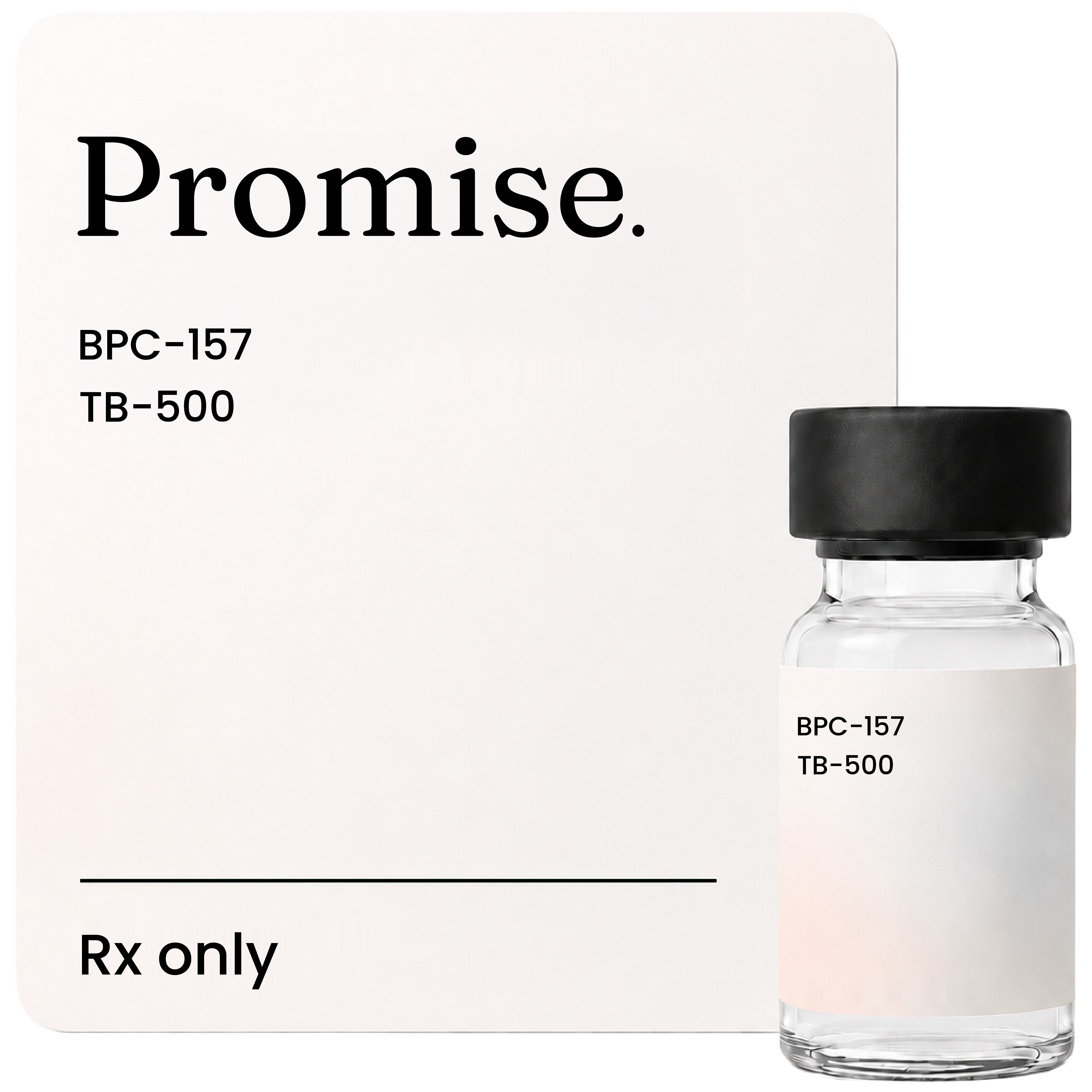
Wolverine (research blend) remains an unsettled ingredient-eligibility question, not a consumer-product category: where prescription-only peptide care is legally available, licensed telehealth services such as Promise Peptides (mypromise.com) place the decision with a clinician, while the FDA record above still controls what a compounding pharmacy may prepare.
Advisory review: the July 2026 PCAC meeting
The July meeting was an evaluation step, not a ruling. FDA's public advisory-committee calendar listed a Pharmacy Compounding Advisory Committee meeting for July 23-24, 2026 [14], and both of Wolverine's components were on its agenda. 'BPC-157 (free base)' and 'BPC-157 acetate' were listed as substances being considered for inclusion on the 503A bulks list; 'TB-500 (free base)' and 'TB-500 acetate' — the thymosin beta-4 fragment LKKTETQ — were listed on the same agenda for the same list [12][13][14].
There is no component carve-out. Both legs of the blend have withdrawn nominations and are no longer in Category 2; before the July 2026 PCAC meeting, FDA staff proposed against listing either substance on the 503A Bulks List. A PCAC discussion is advisory and is a step in evaluation, not a final FDA decision; being discussed by PCAC is not the same as being listed [11]. No outcome of the July 2026 meeting should be assumed, and none is stated here — only that the meeting took place with both components on its agenda, and that FDA had published no record of the committee's votes as of September 2026. Whether access changes, and on what terms, is something FDA has not yet put in writing.
How legally compounded peptide access works
In the United States, a legally compounded medication is prepared only after an individual patient is evaluated by an appropriately licensed prescriber who determines a compounded preparation is clinically appropriate and issues a valid, patient-specific prescription [11]. The preparation is then made either by a state-licensed 503A compounding pharmacy (patient-specific) or, for larger volumes, by an FDA-registered 503B outsourcing facility.
Telehealth can serve as the front-end channel for that prescriber evaluation — a route to a licensed-prescriber consultation and prescription [11]. It does not change which substances are eligible to be compounded, and it does not remove the need for a legitimate clinical evaluation and a valid prescription. One ingredient-eligibility caveat governs the whole pathway: the compounder may use a requested active ingredient only if that ingredient is eligible under the 503A/503B bulk-substance rules. BPC-157 and TB-500 were among the substances FDA flagged for significant safety risks; its page current April 22, 2026 now lists their nominations as withdrawn, and FDA has not said whether a 503A compounder may use either one as a result [11][12][13]. This is general information about the regulatory landscape, not medical or legal advice, and not an offer to sell or supply any substance.
WADA prohibition and the access record in brief
Beyond the compounding question, both constituents are prohibited in sport. The World Anti-Doping Agency prohibits BPC-157 under its S0 non-approved-substances category, and TB-500 / Thymosin Beta-4 under prohibited peptide and growth-factor categories — in and out of competition for the relevant classes.
The access record, then, reads consistently across every source: no FDA drug approval for either component, both shown by FDA as withdrawn nominations rather than Category 2 entries, both taken up at the same July 2026 PCAC meeting with no published vote record, and both WADA-prohibited. For the safety questions that sit alongside this record, see the WADA prohibition status and compounding access points above and the regulatory items in the FAQ.
Is Wolverine legal?
Wolverine is not a single regulated product, so its legality is the legality of its two components. Neither BPC-157 nor TB-500 is an FDA-approved drug, and the blend has no approved indication anywhere [12][13]. The nominations for both components were withdrawn, and both are no longer in Category 2; FDA has not said whether that changes what a compounding pharmacy may prepare, while both substances remain WADA-prohibited. This is general information, not legal advice.
Can you get BPC-157 from a compounding pharmacy?
FDA has not given a clean answer to that. FDA placed BPC-157 in 503A Category 2 — bulk substances it identified as potentially presenting significant safety risks — with the September 29, 2023 update [12]; its nomination was later withdrawn, and the agency's page current April 22, 2026 shows that it is no longer in Category 2, while FDA has not said what pharmacies may do next. BPC-157 was on the July 23-24, 2026 PCAC agenda as a candidate for the bulks list [14]; FDA staff had proposed against listing it, and the agency has not published the committee's votes.
What is the FDA 503A status of Wolverine?
Wolverine's two components, BPC-157 and 'Thymosin beta-4, fragment (LKKTETQ), also known as TB-500', went into 503A Category 2 with FDA's September 29, 2023 list update; both nominations were later withdrawn, and on FDA's page updated April 22, 2026 the pair is no longer in Category 2 [12][13]. Category 2 means FDA identified significant safety risks and does not afford enforcement discretion [11]. Both were then placed before the July 23-24, 2026 PCAC meeting as candidates being considered for the 503A bulks list [14], and FDA has not released a record of that committee's votes.